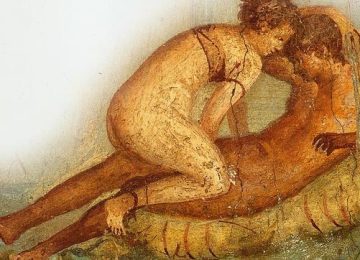



Lust, that ancient deadly sin which the medieval Catholic Church placed at the top of the list, and accompanied by gluttony, greed, sloth, wrath, envy, and pride, remains alive and well in our modern times.
St. Gregory the Great and Thomas Aquinas defined it as the disordered desire for sexual pleasure, and depicted it with fire, chains, and naked bodies. However, in our current society, rather than chains, what we have are screens, algorithms, and social media filters.
The setting has changed, but the desire remains, restless, mischievous, and always ready to put moralists and conservatives in a bind.
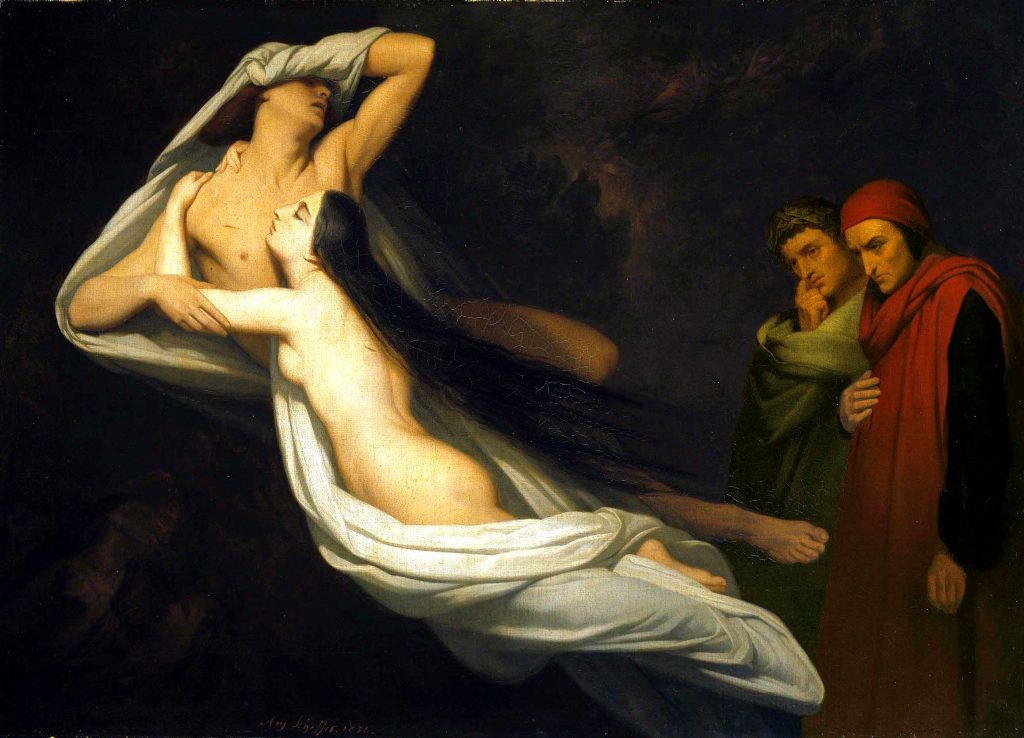
The World Health Organization (WHO) reminds us that 38% of Latin American teens become sexually active before the age of 16. On the other hand, UNESCO warns that more than 60% of the countries in the region lack comprehensive sex education programs. And in Colombia, the Ministry of Health reports that 17% of births are to mothers under the age of 18.
These are cold, hard figures, but behind them lie stories of desire, curiosity, and, of course, a lack of critical education, because lust isn’t fought with sermons, but with knowledge.
Does anyone really believe, in these times when members of the Catholic Church have been embroiled in sex scandals and other forms of harassment, that the fire of desire can be extinguished with a “Lord’s Prayer” and a “Hail Mary”? History shows that the more something is forbidden, the more it’s sought. Repression has only served to fuel secrecy and guilt, never to educate.
The French philosopher, historian, and sociologist Michel Foucault wrote in one of his works, ‘The History of Sexuality’, that power not only prohibits but also produces discourses that shape desire.
Meanwhile, the English sociologist Anthony Giddens, in ‘The Transformation of Intimacy’, notes that modernity turned sexuality into a space for negotiation, and the American philosopher Judith Butler asserts that lust is not a sin, but a political construct.
Institutions such as the Pontificia Universidad Javeriana in Colombia, in recent studies, warn that a lack of critical education leaves young people vulnerable to exploitation and violence.
In other words, lust isn’t a demon hiding under the sheets; it’s a social phenomenon that demands serious reflection, and equally demands a bit of mischief to recognize that desire is part of the human condition.
Today, lust doesn’t hide in medieval brothels or secret confessions; it’s on Instagram, Facebook, TikTok, OnlyFans, in midnight chats, in the emojis that replace words, and in a vast digital array of other platforms.
According to researchers, media hypersexualization turns the body into a commodity, while technology opens the door to fleeting encounters and risks of exploitation.
That’s why the moral debate continues; while some condemn it as a sin, others celebrate it as freedom, but the truth is that lust can no longer be confined to a catechism, it’s a phenomenon that cuts across public health, education, and digital culture, as well as the bedroom, the living room, and even the office.
Lust, more than a sin, is a mirror. It reveals our tensions between freedom and control, between desire and responsibility. In its early days, the Catholic Church condemned it for its potential to cause disorder, but today the real problem is not desire itself, but the lack of critical education to manage it.

Despite the passage of time, the comments and questions still persist: could it be that lust is the most honest of all sins? Because while pride disguises itself as leadership and greed as entrepreneurship, lust doesn’t pretend. It’s pure desire, unvarnished, and the challenge lies in learning to live with it responsibly, not in sweeping it under the rug of morality.
In conclusion, from my point of view, lust has never gone out of style. What was seen as a spiritual disorder in the Middle Ages translates today into challenges in public health, education, and ethics.
That’s why I invite you to stop condemning desire as a sin and start seeing it as part of our humanity with awareness, with responsibility, and with a touch of mischief. If we approach it with mindfulness, we can transform lust into a realm of freedom #sinrecato rather than guilt.
Traducción del español: Catalina Oviedo Brugés