

Today on #sinrecato, we want to share a love story that had to overcome many obstacles in a society that didn’t approve of same-sex marriage. And although times have changed and greater freedoms have been achieved, it was only in 1901 that Marcela and Elisa became the first women in Spain to dare to get married.
Marcela Gracia Ibeas and Elisa Sánchez Loriga got married at the Church of San Jorge in the Galician city of A Coruña on June 8, 1901. To do so, Elisa went by the name Mario and dressed in a men’s suit with pants and a jacket.
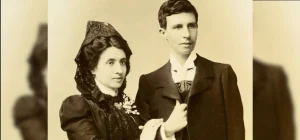 A few days earlier, the priest baptized Mario (Elisa), who led him to believe that his parents were English Protestants and that he wanted to convert to Catholicism. The parish priest didn’t suspect a thing, especially when Mario told him he wanted to marry Marcela, with whom he had been living for several years.
Narciso De Gabriel, author of the book “Marcela and Elisa: Beyond Men”, recounts how this forbidden romance began:
“They met in the mid-1880s. Marcela was studying at the teacher’s college in A Coruña, and Elisa, who had previously studied the same field, was already working there. That’s where they fell in love,” says the writer.
Although they had lived together for more than a decade in various parts of A Coruña, in 1901 they decided to get married, and that’s when their life of anonymity came to an end.
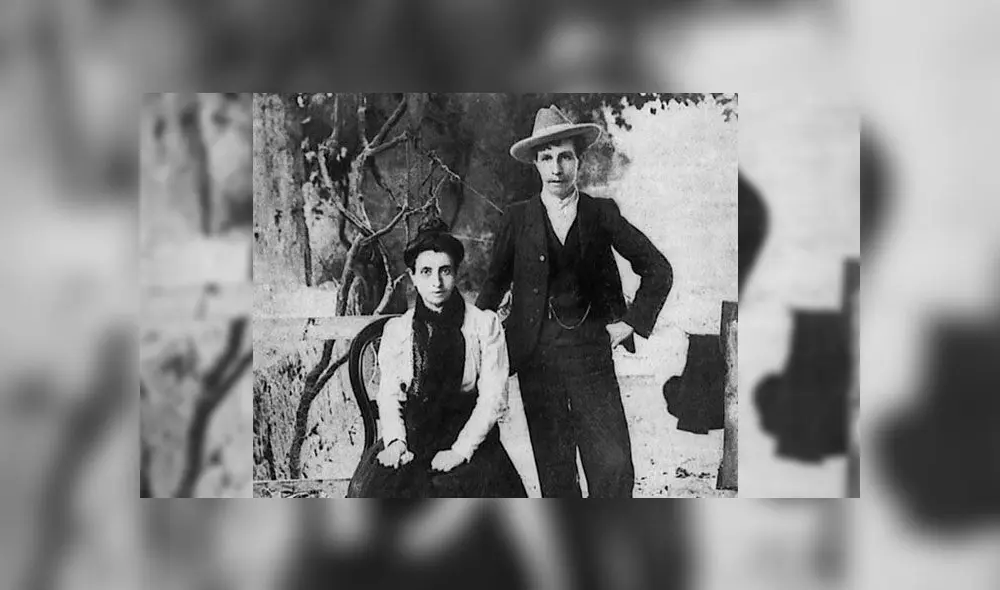
“After the wedding, they went for a walk and had their picture taken by José Sellier, who was one of the city’s most prominent photographers, and then returned to Dumbría, the town where Marcela worked. During the trip, some passengers discovered that Mario was actually Elisa,” says Narciso.
When they arrived in the village, the neighbors began to whisper and exposed the deception. Here in the local dialect, we’d say there was a huge scandal until the tea reached A Coruña.
The local press began covering the story by publishing exclusive photos of the couple, and it received such widespread coverage that it reached not only Galicia but also the press in Madrid and other countries such as France, Belgium, and Argentina.
“But the deception only came to light because of their audacity in returning to the place where they had lived as two women until just a few days earlier,” adds De Gabriel.
After facing harassment from the press, persecution by the Church and the police, and after a judge issued a warrant for their arrest, the couple fled Spain and arrived in the Portuguese city of Porto.
For two months, they lived in peace; Elisa went by the name Pepe, and they pretended to be a heterosexual couple. That is, until August 18, 1901, when they were arrested by the police and imprisoned.
And even though all the odds seemed to be against them, their love story sparked a wave of solidarity in Portugal. The headlines referred to them as “the two married Spanish women.”
The press rallied behind Marcela and Elisa’s cause, as did a segment of Portuguese society and some Spaniards living in Porto who defended the two women’s marriage.
Despite the uproar, Spain requested the couple’s extradition, and Portugal granted it. However, before they were extradited to Spain, they were tried and acquitted in Portugal of the charges against them.
Before the handover could take place, Marcela and Elisa escaped again, but this time they decided to go to Argentina, where they would be known as Carmen and María, respectively.
Two years after their marriage, Elisa was the first of them to arrive in Argentina, and shortly thereafter Marcela arrived accompanied by a little girl, their daughter, who had been born in Porto on January 6, 1902.
Regarding the couple’s daughter, De Gabriel explains that this pregnancy may have been part of their plan, that is, the couple wanted to have a child. However, once they arrived in Argentina, all trace of this daughter was lost.
Elisa, who was Mario in Spain, Pepe in Portugal, and María in Argentina, is now marrying, as a woman, a man of Danish origin. The marriage ends badly because Elisa refuses to have sex with her husband, who is more than 20 years older than her.
 “After making some inquiries, the husband discovered that he was married to the woman who, in Spain, had been the subject of a ‘marriage without a man’, a headline coined by the newspaper La Voz de Galicia. Faced with this, he filed a complaint against his wife and sought an annulment of the marriage. The judge ruled that María, formerly Elisa, must be examined by three doctors. The conclusion was that she was a woman and that the marriage was perfectly valid,” adds De Gabriel.
More than a century after Marcela and Elisa’s marriage, many questions remain: What happened to Marcela and her daughter? Did Elisa continue her marriage with the Danish man? Did Marcela and Elisa reunite and find happiness?
Recently, in 2016, the City Council of A Coruña, in northwestern Spain, announced that they would name a street after the two protagonists of that wedding, recognizing this union as the country’s first sapphic marriage.
The truth is that their “marriage without a man” continues to amaze people and serve as a source of inspiration. Based on this story full of resilience and love, a movie was released in 2019, exhibitions have been held, and books, articles, and this #sinrecato column have been written to continue to share one of the most revolutionary and romantic stories in the LGBTIQ+ community.
Traducción del inglés: Catalina Oviedo Brugés