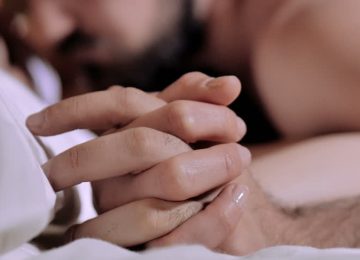



Many people believe that being romantic in a romantic relationship is corny or old-fashioned because they simply aren’t used to being treated with kindness and affection, or to receiving countless gifts that aren’t always material.
For a long time, romance has been a very powerful and enduring concept in our society. It has inspired songs, movies, books, and poems, and, in some ways, has shaped the expectations couples have for their relationships.
Romance has endured over time, but it has also evolved. The concept of romantic love, from a historical and cultural perspective, is based on idealization, passion, and the idea that there is one person destined for each of us.
 Among its most remarkable characteristics is the belief that “love must be unique, exclusive, eternal, and capable of overcoming any obstacle.” According to this, love is at the center of life and personal happiness.
Now, it’s not that this concept is good or bad, it’s just that the influence of films, music, and literature has significantly distorted the reality of relationships and set the bar very high in terms of how we interact as couples.
In works such as William Shakespeare’s ‘Romeo and Juliet’, love is portrayed as absolute, unconditional, passionate, and intense, but also as quite dramatic, impossible, and full of sacrifice.
Of course, these stories are moving and entertaining, but they also create false expectations that were long considered universal truths.
And let’s not forget romantic cinema. The seventh art has reinforced the idea that love is the cornerstone of happiness and that a life without a partner is incomplete. It’s a formula that includes magical encounters, difficult trials, and a guaranteed happy ending.
When it comes to romance, music is also part of the mix. In the past, song lyrics idealized love and embellished words to tell the other person that they were loved or desired. Today, lyrics are more direct and don’t beat around the bush, and passion, desire, and devotion are expressed #sinrecato
Singing about love and heartbreak is also the universal language for sharing emotions and disappointments, and reinforcing the idea that without a partner, life has no meaning.
And it doesn’t end there, since romance hasn’t been limited to art. Western culture has long held the deeply ingrained belief that the main goal in life is to find the ideal partner, get married, and start a family. For a long time, that idea influenced men and women who came to see it as the measure of a successful life.
However, times change, and we currently live in a rather superficial society, where a person’s worth depends on their physical appearance or financial income. Love is now seen as something that isn’t perfect, so when it is idealized to such an extent, frustration and toxic behaviors soon creep into the relationship.
Let me clarify that being in love isn’t bad, but when your entire life revolves around a relationship and there’s no space or time for other interactions with your family or friends, an unhealthy emotional dependency that is harmful to everyone involved develops (read the column on types of attachments: https://sinrecato.com/how-attachment-influences-relationships/).
If love is viewed as something absolute and exclusive, it leads to relationships based on sacrifice and personal and professional self-denial, which in turn results in insecurities, jealousy, and low self-esteem, often justified in the name of love.
New trends propose a healthier form of love based on communication, mutual respect, and autonomy. In line with this openness, love is also experienced in many ways, not only as a couple, but also with family, friends, and, of course, through self-love.
Here we’ll provide a classification of romanticism that may well align with your ideals:
Allromantic: This is a form of attraction considered socially “normal” and is based on being in a romantic relationship. Romantic feelings are experienced toward a person regardless of their gender.
Amatonormativity: This is a social assumption and pressure that asserts that everyone believes in and thrives on romantic relationships. The traditional concept is that everyone is better off in an exclusive, romantic, long-term relationship and that everyone seeks such a relationship.
Aromantic: A person who feels little to no romantic attraction toward others, though they may feel sexual attraction.
Autoromantic: A person who feels romantic attraction toward themselves. They are capable of being in a romantic relationship but prioritize themselves. They “pamper themselves,” to put it in some way, and engage in activities such as buying themselves gifts, going to the movies alone, eating at a restaurant, etc.
Biromantic: This is a romantic orientation in which a person has the capacity to form a romantic and/or emotional connection with two or more genders simultaneously. It’s both a romantic orientation and a lifestyle. These people may or may not feel sexual attraction toward another person.
Demiromantic: Here, it’s necessary to establish an emotional connection with someone before being able to experience romantic feelings for them.
Grayromantic: When a person experiences romantic feelings infrequently throughout their life, they fall into the gray area of the romantic spectrum and don’t identify as either romantic or aromantic. And while they may experience romantic attraction, they don’t necessarily desire a relationship.
Heteroromantic: A person who experiences romantic feelings only toward the opposite sex.
 Homoromantic: A person who is attracted, either romantically or sexually, to another person of the same sex.
Panromantic: Experiences romantic feelings toward people of all gender identities.
Polyromantic: A polyromantic person may have romantic feelings toward people of multiple genders, and this doesn’t always include sexual attraction.
It’s a fact that love has changed, because expressing it no longer requires following a step-by-step guide. Today, romance is freer and adapts to every lifestyle; now we talk about concepts like diversity and self-love.
For me, romance will never die as long as chivalry, kindness, politeness, thoughtful acts, good manners, and K-dramas continue to exist.
The most important thing we must have to understand is that love is a feeling in which two people grow, support one another, and respect each other. Love means that, even if your tastes and preferences differ, your hearts still beat because of the same feeling.
Traducción del español: Catalina Oviedo Brugés