

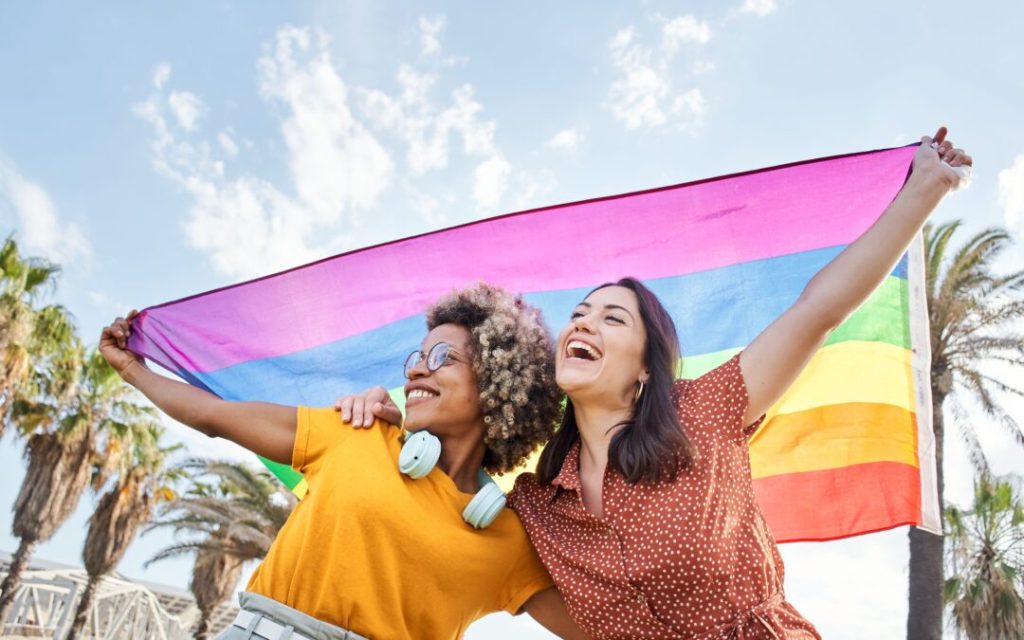

If you’re still confused about things like the letters in the LGBTIQ+ community, this #sinrecato column is for you. The world continues to change and evolve, and that’s why it’s important to understand that there are many conceptual differences regarding terms that may seem simple at first glance but actually encompass more than we think: gender, identity, and sexual orientation.
According to psychologist and sexologist Isa Duque, there’s no single way to experience sexuality; after all, it’s very difficult to classify the unclassifiable: “We’ve tried to develop a classification system to help highlight the different options for bodies, genders, identities, and sexual orientations in order to explain and advocate for greater tolerance.”
And while this guide doesn’t aim to cover every possible option, it does seek to help people reflect on the realities that exist beyond what they’ve known so far.
 To begin with, gender is related to the roles that have been socially constructed through activities, behaviors, attributes, and other factors considered appropriate for a person with a vulva or a person with a penis.
The sexologist explains that these are gender stereotypes; fixed images that a society holds about what masculinity and femininity are “supposed” to be. These stereotypes are typically associated with sexual characteristics, which is why they can create false expectations about what each sex should be and look like.
Physical and personality traits such as being stronger, having sharper facial features, being less sensitive, or being more or less intuitive are considered masculine, while being more sensitive, having softer facial features, or having less body hair are considered feminine.
Gender roles are the functions assigned to each sex, both in the public and private spheres. For example, the traditional social role for women has always been that of a homemaker, taking care of the household, while the traditional social role for men has been to support the family and be the breadwinner.
Of course, these gender roles have been changing as people have gained access to activities that previously seemed exclusively feminine or masculine.
So far, so good; your body doesn’t determine your identity or your sexual orientation. According to sexologist Duque, there are several factors that influence sexual characteristics, and their variations are as follows:
- The internal reproductive organs.
- The hormones that regulate levels of estrogen, androgens, and progestogens.
- The karyotype, which refers to how chromosomes are arranged (XX, XY).
- The gonads, which determine whether a person has ovaries or testicles.
- Secondary sexual characteristics, such as the appearance of body hair in certain areas, breast size, etc.
At birth, both men and women have a set of primary sexual characteristics, that is, chromosomes and hormones, which are classified as female, male, or intersex (a combination of both).
Intersex refers to sexual variability that isn’t evident at birth, which is when sex assignment is usually confirmed. An intersex person, according to biomedical criteria, is neither male nor female.
Sometimes, it takes several years until puberty for the rest of the secondary sexual characteristics to appear. However, in other cases, additional medical tests are required, so it may take a long time to determine the outcome of sex determination.
Now that we’ve established what gender is, let’s talk about the ways to express it. Gender identity is the sense of belonging to a particular gender and refers to how you feel and express that gender emotionally.
According to experts, gender identity doesn’t necessarily correspond to the biological sex assigned at birth.
- Cis Realities: When there is a correspondence between one’s perceived gender identity (man or woman, in this case) and the sex assigned at birth (female or male), these individuals are referred to as cis or cisgender.
- Trans Realities: When there is no alignment between one’s gender identity (man, woman, or non-binary) and their assigned sex, the person is referred to as trans. These realities include transsexual, transgender, genderqueer, people with diverse gender expressions, and other gender variations.
On the other hand, sexual orientation refers to who you are attracted to, both sexually and emotionally. It’s the physical, emotional, and affective attraction felt toward another person or people.
 This classification refers to:
- Heterosexuality: A person who is attracted to people of the opposite sex.
- Homosexuality: A person who is attracted to people of the same sex.
- Bisexuality: A person who is attracted to others regardless of their sex assigned at birth or their gender identity.
- Pansexuality: Attraction to others regardless of their identity. This term was coined to be more inclusive, but today many people consider it part of the bisexuality umbrella.
- Asexuality: Sexual attraction is experienced differently, such as through intellectual or romantic attraction.
- Antrosexuality: It’s not identified as a specific sexual orientation, but rather refers to people who are flexible and can be heterosexual, homosexual, pansexual, or even asexual.
In a way, these concepts and classifications can guide us in understanding how both men and women relate to one another today.
Let’s remember that the most important thing is to accept and respect each person’s differences. We should all feel free and happy with ourselves, and even more so with who we choose to be. Celebrate Pride Month with peace and love, and keep in mind that as long as someone else’s preferences aren’t harming you, hate will always be your worst enemy.
Traducción del español: Catalina Oviedo Brugés