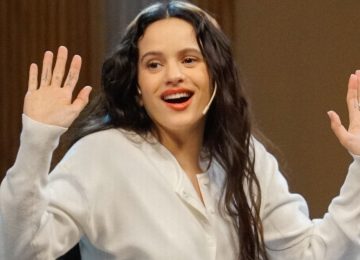



After performing three concerts in Argentina in August 2025, Catalan singer Rosalía surprised the press not only with her undeniable talent but also with her statements:
“Right now, I’m single and I’m a ‘volcel’, that is, I’m practicing voluntary celibacy. Right now, my priority is myself, my art, and my time. If you see me with a man, please don’t assume he’s my boyfriend.”
Psychologist and sexologist Noelia Benedetto, a specialist in non-monogamous relationships, explains the concept: “Volcel is an acronym for ‘voluntary celibate’ or ‘voluntary celibacy,’ and it refers to people who choose not to have sexual relations or erotic relationships by their own decision, at least for a period of their lives.”
 This concept is not related to the abstinence imposed by some religions or certain cultures, as in the case of incels, or involuntary celibates, who practice celibacy due to a lack of sexual opportunities, whether because of physical attributes or life circumstances.
Benedetto explains that volcel is not a diagnosis or a problem, but rather an elective, temporary, or stable sexual behavior that is part of the diverse expressions and forms of human sexuality. In other words, it’s a conscious choice that prioritizes other areas, such as personal, emotional, spiritual, or professional life over the sexual sphere.
Many people choose this path out of a desire to focus on themselves without the distractions or commitments that sex can entail. In light of this, the sexologist adds that it’s also seen as a critique of sexual hyper-availability:
“There are many people who have gone through negative, sexual relationships or violent experiences, such as overly demanding dynamics, breakups, or unpleasant sexual practices, and choose a period of voluntary celibacy as a form of recovery, a ‘detox,’ or a way to rebuild their own desire.”
In these cases, the concept applies to those who are going through a phase of self-discovery in terms of reevaluating their sexual identity, boundaries, and desires. Additionally, it helps them analyze their erotic landscape and interpret what they want and how they want to express or enhance it.
On the other hand, experts suggest that volcel is considered a political stance, a critique of capitalism, hyperproductivity, and the commodification of gender roles or sex seen as just another product.
In this day and age, the fact that a young figure like Rosalía has called herself a “volcel” is a way of celebrating singlehood in a positive light, as a conscious decision not to be in a romantic or sexual relationship and, instead, to focus on one’s own emotional growth.
The singer’s statements can be interpreted not only as a decision to forgo being in a relationship for a while or being someone’s partner, but also as a rejection of the social expectation that being in a relationship is the ultimate form of interpersonal fulfillment.
The choice of voluntary celibacy can be motivated by many reasons, ranging from personal growth to spiritual or political decisions. As we explained earlier, this doesn’t refer to permanently stop having sex, but rather a pause or a conscious choice that can last weeks, months, or even years.
It’s worth noting that those who adopt this lifestyle may experience social misunderstanding or stigmatization, feelings of loneliness or isolation in certain contexts, external pressure to return to “normal,” and difficulty forming emotional bonds if their decision is misinterpreted.
 If, after reading all of this and doing more research, you decide to try voluntary celibacy, here are some recommendations for navigating that path in a healthy way:
- Don’t view it as a way to avoid unresolved emotional pain.
- Tell your close circle of friends and family to avoid misunderstandings.
- Take care of your mental health. If loneliness or isolation are affecting you, seek professional help.
Voluntary celibacy isn’t a lack of sexual opportunities or an external obstacle; rather, it’s a deliberate decision. A person chooses not to have sex of their own free will, and this doesn’t mean they lack desire or can’t find a partner, it simply means this is the lifestyle they consider most appropriate at this point in their life.
Traducción del español: Catalina Oviedo Brugés