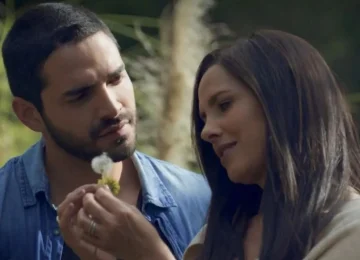


Today I’m going to tell you about a sad, tragic, and dark story that took place in London in the 1970s. Barbara Daly Baekeland was a 10/10, beautiful, wealthy woman, and a member of New York high society with an almost perfect life. She was married to millionaire Brooks Baekeland, and they led a glamorous, unrestricted life.
And although she had everything she needed to be happy, her life was a lie. The truth was that her marriage was just for show, because both of them were cheating on each other. Nevertheless, despite everything, they had their only son, Antony, in 1946.
Barbara was not a conventional mother and, although she loved her son, the bond she had with him was not very healthy, it was more one of codependency and obsession. She saw her son as her only emotional support in the face of her marital crisis.
 When Antony reached adolescence, he discovered he was gay, and that was when his mother, who clung to strict social norms and perfection, rejected him out of shame and the belief that she had failed as a parent.
Because of this, Barbara made a drastic decision to “cure” him. At first, she tried to get her son to have sex with sex workers, thinking that this would force him to redirect his desire toward women.
However, she later did the unthinkable: she had sex with her own son, which marked the beginning of a tragic end. After his parents’ divorce, Antony’s mental health continued to deteriorate because he wasn’t only dealing with the trauma of incest and his mother’s pressure but also with an identity crisis.
On the morning of July 17, 1972, in London, in a violent outburst, Antony stabbed his mother with a kitchen knife, killing her. The matricide shocked British and American high society, both of which immediately attempted to downplay the scandal.
Antony had previously been arrested for attempted murder of his mother, but he was found not criminally responsible by reason of mental illness and briefly committed to a psychiatric clinic. Years later, following the matricide and another attempted murder, this time against his maternal grandmother, Antony was sent to Rikers Island Prison in New York to await trial, where he committed suicide in 1980 at the age of 34.
This tragic and dark story was turned into a book in 1985 by American authors Natalie Robins and Steven M. L. Aronson, titled ‘Savage Grace’. In 2007, the book served as the basis for the film adaptation of the same name, directed by Tom Kalin and starring Oscar winner Julianne Moore.
Antony’s story, sadly, is just one of many manifestations of intolerance still seen around the world against members of the LGBTIQ+ community.
A recent UN report explains how people with same-sex orientations and gender identities different from their registered sex suffer not only discrimination but also violence and various forms of torture aimed at “curing” them.
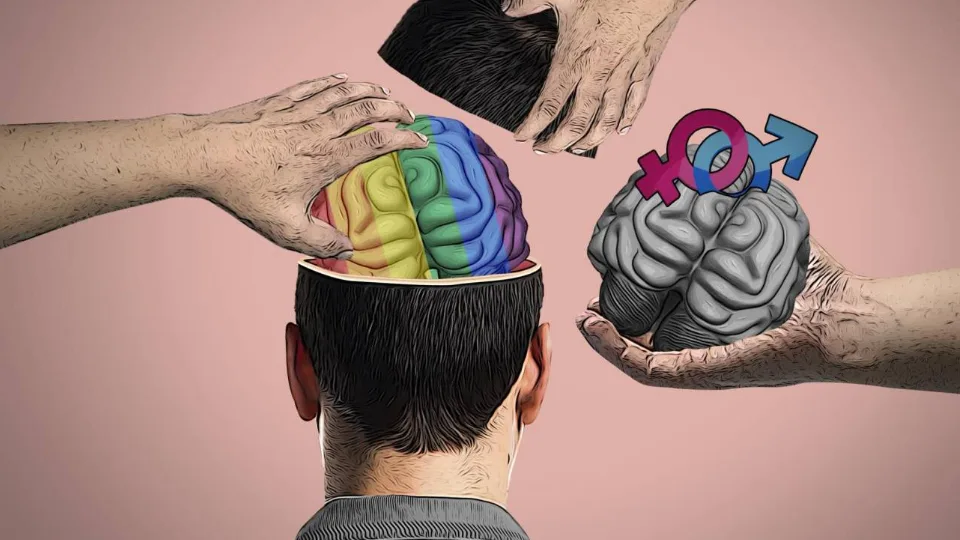
One such practice is so-called “conversion therapy,” which takes the form of exorcisms, forced psychological treatments, and even rape.
Currently, 69 countries worldwide criminalize consensual same-sex relationships between adults, meaning that 2 billion people, or one-third of the world’s population, live in discriminatory environments.
“This criminalization has measurable consequences in terms of public health and access to education,” says Víctor Madrigal-Borloz, a Costa Rican lawyer and independent expert on protection against violence and discrimination based on sexual orientation and gender identity.
In addition, the expert explains that LGBTIQ+ youth drop out of school three times more often than those who are not part of the community, and that, due to the lack or limited availability of sex education programs, transgender people contract HIV/AIDS 47 times more often than gay men and even 76 times more often than the general population.
Madrigal-Borloz presented a report to the UN Human Rights Council, in which he compiled the testimonies of lesbian, bisexual, gay, transgender, and gender-diverse individuals who were victims of these “therapies” that aim to change their sexual orientation or gender identity because others claim they are “sick.”
It doesn’t take much reading to conclude that conversion therapies cause profound physical and psychological trauma to those who undergo them, which is why the United Nations has determined that they amount to torture or other cruel, inhuman, or degrading treatment.
The Costa Rican lawyer’s petition calls on states to ban these practices by repealing the laws that permit them, as well as those that criminalize diversity in sexual orientation and gender identity. He also calls for urgent measures to protect queer children and youth (queer: a person whose sexual orientation or gender identity doesn’t conform to traditional norms).
 Like this Costa Rican lawyer, many other people working with the Human Rights Council’s Special Procedures address situations in specific countries or thematic issues in other parts of the world.
They aren’t UN staff members but serve as volunteers, so they don’t receive a salary for their services. They carry out this work independently because they want to protect people who suffer violence and discrimination due to their sexual orientation or gender identity.
Madrigal-Borloz believes in a world free from the criminalization of sexual orientation and gender identity and, in particular, in the elimination of conversion therapy.
As a mom, I can say that I’m always wondering whether I’m being too strict or too lenient when it comes to how I’m raising my daughters, it’s a constant struggle for me. However, there’s one thing I’m certain of: I will always support them in their decisions, because ultimately, it’s their life, not mine. Of course, I’ll share my point of view, but I won’t attack them or impose my thoughts on them.
That’s what we parents are here for: to guide our children, not to hurt them!
Traducción del español: Catalina Oviedo Brugés